From Paul Weller’s emergence as a songwriting force with the power punk of The Jam in the 1970s to the soul sounds of The Style Council in the 1980s—followed by many diverse solo albums since—he has continually evolved his approach to songwriting. Weller warns that writers who don’t seek new challenges risk simply repeating themselves and could start to bore their listeners as a result.
“No matter what age you are, there’s always something else to learn,” he told Another Man magazine in a recent interview. “I just want to keep finding new things—new ground. You have to keep moving forward.”
Weller believes it’s essential for songwriters to set themselves a goal with each new song. “I might have an idea, however vague it is at the time, of where I want to try and take the music,” he told Another Man. “Sometimes you get there, sometimes you don’t – and sometimes you end up with something that isn’t what you set out to do, but is something else again, and something that surprises you because you didn’t realise you could go there.”
He added: “It’s a question of setting yourself a certain amount of challenges. Otherwise it’s too easy to get caught in a cycle of doing the same things over and over again.”
When new writers achieve an important breakthrough and discover a songwriting ‘formula’ that really works for them, they are naturally tempted to stick to it on every song. The innovation could be the result of a particular chord progression—or the use of a specific climactic chord change or a musical phrase—and it helps them create a new kind of song that evokes the best response they’ve ever had from listeners.
While they may want to take advantage of this winning ‘formula’ to help them establish their own distinctive sound and style, they should be careful not to end up writing songs that are all built around the same few notes, chords and keys. Each new song may sound great on its own, but there’s a danger that a writer could end up with a collection of songs that all sound alike—especially if he or she puts them together on the same demo submission, or on a showcase album, or on their own website and YouTube channel.
Paul Weller believes that being open to collaboration with other people is one way of constantly exploring new things and “expanding your own world”. For example, on his latest solo album, True Meanings (his 14th studio album), Weller has teamed up with other talent such as Lucy Rose, Conor O’Brien from Villagers, and Erland Cooper.
It has resulted in yet another new ‘sound’ for Paul Weller, as this beautiful track, ‘Gravity,’ demonstrates …
“SURPRISING RHYMING” – The Alternative Rhyming Dictionary for Songwriters and Poets – is available from Amazon as a US paperback, a UK paperback, and across Europe. It is also available as an eBook from Amazon’s Kindle store in the United States, the UK and Europe, as well as Apple’s iTunes Book Store, Barnes & Noble’s Nook Store and Rakuten’s KoboBooks.
A 5-star rated book at Amazon, “How [Not] To Write A Hit Song! – 101 Common Mistakes To Avoid If You Want Songwriting Success” is available from Amazon as a US paperback, a UK paperback and as an eBook from Amazon’s Kindle Store. It is also available from Apple’s iTunes Book Store, Barnes & Noble’s Nook store, and Rakuten’s KoboBooks.
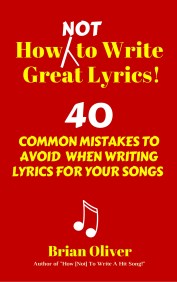
“How [Not] To Write Great Lyrics! – 40 Common Mistakes To Avoid When Writing Lyrics For Your Songs” is available from Amazon and Barnes & Noble as a US paperback, UK paperback and as an eBook from Amazon’s Kindle Store. It is also available from Apple’s iTunes Book Store, Barnes & Noble’s Nook store, and Rakuten’s KoboBooks.
It is also available as an eBook from Amazon’s Kindle store in the United States, the UK, Canada, Australia, and across Europe—as well as Apple Books, Barnes & Noble and Rakuten’s KoboBooks.
“SURPRISING RHYMING” – The Alternative Rhyming Dictionary for Songwriters and Poets – is available from Amazon as a US paperback, a UK paperback, and across Europe. It is also available as an eBook from Amazon’s Kindle store in the United States, the UK and Europe, as well as Apple’s iTunes Book Store, Barnes & Noble’s Nook Store and Rakuten’s KoboBooks.
A 5-star rated book at Amazon, “How [Not] To Write A Hit Song! – 101 Common Mistakes To Avoid If You Want Songwriting Success” is available from Amazon as a US paperback, a UK paperback and as an eBook from Amazon’s Kindle Store. It is also available from Apple’s iTunes Book Store, Barnes & Noble’s Nook store, and KoboBooks.
“How [Not] To Write Great Lyrics! – 40 Common Mistakes To Avoid When Writing Lyrics For Your Songs” is available from Amazon and Barnes & Noble as a US paperback, UK paperback and as an eBook from Amazon’s Kindle Store. It is also available from Apple’s iTunes Book Store, Barnes & Noble’s Nook store, and KoboBooks.
In a recent live Q&A session at the Liverpool Institute for Performing Arts (LIPA), Paul McCartney told Pulp frontman Jarvis Cocker that, in the early days of The Beatles, he and John Lennon had to write catchy songs because it was the only way they could remember them. Portable tape recorders hadn’t been invented yet.
“We had to write songs you could remember easily,” McCartney said. “I think that turned out to be a good thing.
“John and I would have a writing session, go away and have an evening out, and in the middle of the evening we’d think, ‘What was that thing we wrote? Oh my God we’ve forgotten!’ But it would always come back to us in the morning.
“We said if we can’t remember it, how do we expect other people to? So, we were writing stuff that was memorable … and I think it still is.”
# # # #
“SURPRISING RHYMING” – The Alternative Rhyming Dictionary for Songwriters and Poets – is available from Amazon as a US paperback, a UK paperback, and also across Europe. It is also available as a Kindle ebook in the United States and in the UK and Europe. Read more about the book HERE (USA) … HERE (UK) … HERE (CANADA).
A 5-star rated book at Amazon, “How [Not] To Write A Hit Song! – 101 Common Mistakes To Avoid If You Want Songwriting Success” is available from Amazon as a US paperback, a UK paperback and as an eBook from Amazon’s Kindle Store. It is also available from Apple’s iTunes Store (Books/Arts & Entertainment/Music), Barnes & Noble’s Nook store, and KoboBooks.
“How [Not] To Write Great Lyrics! – 40 Common Mistakes To Avoid When Writing Lyrics For Your Songs” is available from Amazon and Barnes & Noble as a US paperback, UK paperback and as an eBook from Amazon’s Kindle Store. It is also available from Apple’s iTunes Store (Books/Arts & Entertainment/Music), Barnes & Noble’s Nook store, and KoboBooks.
“Songwriting is still the same uncomplicated process it was when I was 12 years old writing songs in my room,” said Taylor Swift in a recent interview with Harper’s BAZAAR magazine.
She said: “There are definitely moments when it’s like this cloud of an idea comes and just lands in front of your face, and you reach up and grab it.
“A lot of songwriting is things you learn, like structure, cultivating that skill and knowing how to craft a song. But there are mystical, magical moments—inexplicable moments—when an idea that is fully formed just pops into your head.”
Instead of allowing ideas to bubble to the surface naturally from their subconscious, many new writers tend to try too hard and end up forcing the creative process. They try to cram too much into a song—making it way too long and unnecessarily complicated, and leaving the listener feeling confused.
As Taylor Swift suggests, it is important to avoid over-thinking or over-writing your songs. Sometimes, the chords, melodies and lyrics that come to you instinctively are the right ones. So don’t spend forever searching for the perfect melody or lyrics. Don’t keep on going until you end up with way too many notes and words.
Just make sure your song form is clear, predictable and easy to follow. Keeping it simple will make it easier for people to remember the song.
In other words, know when to quit.
As Sting once remarked: “Songs have to be simple. It’s not like you have a huge canvas to paint on or a novel length to fill. You’ve got to tell the story in two verses, a chorus and a coda and that takes some skill.”
It is also available as an eBook from Amazon’s Kindle store in the United States, the UK, Canada, Australia, and across Europe—as well as Apple Books, Barnes & Noble and Rakuten’s KoboBooks.
“SURPRISING RHYMING” – The Alternative Rhyming Dictionary for Songwriters and Poets – is available from Amazon as a US paperback, a UK paperback, and also across Europe. It is also available as a Kindle ebook in the United States and in the UK and Europe. Read more about the book HERE (USA) … HERE (UK) … HERE (CANADA).
A 5-star rated book at Amazon, “How [Not] To Write A Hit Song! – 101 Common Mistakes To Avoid If You Want Songwriting Success” is available from Amazon as a US paperback, a UK paperback and as an eBook from Amazon’s Kindle Store. It is also available from Apple’s iTunes Store (Books/Arts & Entertainment/Music), Barnes & Noble’s Nook store, and KoboBooks.
“How [Not] To Write Great Lyrics! – 40 Common Mistakes To Avoid When Writing Lyrics For Your Songs” is available from Amazon and Barnes & Noble as a US paperback, UK paperback and as an eBook from Amazon’s Kindle Store. It is also available from Apple’s iTunes Store (Books/Arts & Entertainment/Music), Barnes & Noble’s Nook store, and KoboBooks.
Tom Odell’s beautiful song ‘Constellations’—from his 2016 album Wrong Crowd—opens with Tom talking to a girl in a busy bar and his lyrics vividly describe the scene. It’s a great example of why songwriters should always show listeners what is happening in their song, rather than just tell them …
“In order to write it,” Tom Odell told Dale Kawashima of SongwriterUniverse magazine, “I had to imagine every detail in that bar—the picture on the wall, the girl’s voice, the jacket on the back of the chair, the gentle hum of the bar, the chair that squeaks, the look on her face.”
He explained: “I almost had to live it in my head in order to write the song. But obviously you can’t get all of that detail in the song. You can only pick a few of those details to sing.”
One of the most frequent mistakes in lyric writing is trying to evoke a strong emotional response in listeners simply by stating what you’re feeling or thinking (for example, “I’m getting mad” or “I’m feeling down”).
This is actually one of the least effective ways to make a lasting connection with the people who hear your song. In the verse lyrics especially, you need to show listeners what the song is about by painting vivid word pictures that describe the physical experience of the emotions you want to convey.
In other words, invite the audience into the world of your song by allowing them to “watch” the story unfold like a movie. If you describe each scene as if you’re looking through the lens of a film camera, you’ll be able to help people ‘see’ and experience what the performer of your song is feeling.
You can also help listeners to enter your song by including descriptions of familiar, tangible objects in your lyrics—such as an empty chair, a wine glass, a framed photograph, and other concrete nouns which refer to physical entities that can be observed by at least one of the senses. These images are more likely to engage listeners than a dull statement of fact.
Legendary singer-songwriter Joni Mitchell has always taken a highly visual approach to her lyrics. “My style of songwriting is influenced by cinema,” she once explained. “It’s very visual. I’m a frustrated filmmaker. You’re scoring the actress, but the actress is singing the lines and trying to get them as conversational as film.”
She added: “A fan once said to me, ‘Girl, you make me see pictures in my head!’ and I took that as a great compliment—that’s exactly my intention.”
It is also available as an eBook from Amazon’s Kindle store in the United States, Canada, the UK, Australia, and across Europe—as well as Apple Books, Barnes & Noble and Rakuten’s KoboBooks.
“SURPRISING RHYMING” – The Alternative Rhyming Dictionary for Songwriters and Poets – is available from Amazon as a US paperback, a UK paperback, and also across Europe. Read more about the book HERE (USA) and HERE (UK).
A 5-star rated book at Amazon, “How [Not] To Write A Hit Song! – 101 Common Mistakes To Avoid If You Want Songwriting Success” is available from Amazon as a US paperback, a UK paperback and as an eBook from Amazon’s Kindle Store. It is also available from Apple’s iTunes Store (Books/Arts & Entertainment/Music), Barnes & Noble’s Nook store, and KoboBooks.
“How [Not] To Write Great Lyrics! – 40 Common Mistakes To Avoid When Writing Lyrics For Your Songs” is available from Amazon and Barnes & Noble as a US paperback, UK paperback and as an eBook from Amazon’s Kindle Store. It is also available from Apple’s iTunes Store (Books/Arts & Entertainment/Music), Barnes & Noble’s Nook store, and KoboBooks.
With more new songs being written every week than ever before, songwriters are finding it harder to sound original and find rhymes and phrases that have not already been used. Now, a new kind of rhyming dictionary—titled Surprising Rhyming—aims to make it easier for writers to avoid clichés and craft rhymes that people may not have heard before.
Built on the findings of an in-depth study of the kind of ingenious rhymes used by some of the world’s greatest songwriters and lyricists, Surprising Rhyming offers an astonishing array of alternative rhyme options. Its 624 pages contain over 150,000 rhyming solutions for some 1,400 different rhyme sounds. These rhyme types are much broader than those found in traditional rhyming dictionaries which tend to show only ‘perfect’ or ‘true’ rhymes.
Using too many perfect rhymes can sometimes make a lyric sound tedious and predictable—and prone to clichés. To avoid this, Surprising Rhyming focuses instead on off-the-wall false-rhymes, half-rhymes, slant-rhymes and near-rhymes that are less predictable than exact rhymes … and are therefore more likely to surprise an audience.
The book also includes many new words that have been added to standard dictionaries in recent years.
The thousands of ‘surprising’ rhymes crammed into Surprising Rhyming’s pages are based on analyses of the unconventional ‘imperfect’ rhymes that have been used by influential songwriters and lyricists such as: Chuck Berry, David Bowie, Sara Bareilles, James Bay, Leonard Cohen, Bob Dylan, Sia Furler, Hozier, Jay-Z, Billy Joel, Carole King, Michael Kiwanuka, John Lennon, Lorde, John Mayer, Joni Mitchell, Paul McCartney, Van Morrison, Bonnie McKee, Randy Newman, Dolly Parton, Christina Perri, Katy Perry, Ed Sheeran, Paul Simon, Stephen Sondheim, Taylor Swift, Cat Stevens, Bernie Taupin, James Taylor, Jimmy Webb, Lucinda Williams, Stevie Wonder … and many more.
The concept of the book was inspired by a remark made by Stephen Sondheim, the legendary Broadway composer and lyricist. In a PBS News Hour interview, Sondheim described how people’s ears have come to expect certain rhymes and suggested that writers should try to fool their audience by coming up with rhymes that will take listeners by surprise.
The ‘surprising’ rhymes listed in this book are typically formed by words with similar but not identical sounds (such as rain/blame or day/late) rather than the more predictable ‘perfect’ rhymes found in traditional rhyming dictionaries (like rain/pain or day/stay).
For example, if you’re looking for a rhyme for the word “true”, rhyming dictionaries typically offer perfect rhymes such as “blue”, “due”, “knew” or “who”. Instead, Surprising Rhyming pairs “true” more imaginatively with words like “smooth”, “tune”, “gloom”, “soon” and “groove”.
If your rhyme word is “suffer”, traditional rhyming dictionaries offer rhymes like “rougher”, “tougher” or “buffer”. Surprising Rhyming’s alternative suggestions for “suffer” include: “lover”, “brother”, “summer”, “discover” and “another”.
And if you need a rhyme for the word “gamble”, you’ll normally be offered “ramble”, “scramble” or “shamble”. But Surprising Rhyming’s solutions also include: “bangle”, “dangle”, “candle” and “handle”.
“Surprising Rhyming is a new kind of rhyming dictionary that encourages writers to be more adventurous in their approach to rhyming,” explained the book’s creator and editor, Brian Oliver, author of the five-star rated book How [Not] to Write a Hit Song! 101 Common Mistakes to Avoid If You Want Songwriting Success.
He said: “Many of the cleverest perfect rhymes have been used so many times over the years that they’ve now become tired clichés and writers often struggle to find rhymes or phrases that haven’t been heard before. As a brainstorming tool, Surprising Rhyming is designed to enable writers to challenge themselves and make their rhymes bolder and more original … and less predictable.”
The book is laid out clearly to make it quick and easy to find the perfect word to achieve a memorable rhyme. There are separate sections for one-, two-, three- and four-syllable rhymes, along with many useful tips on rhyming.
“SURPRISING RHYMING” – The Alternative Rhyming Dictionary for Songwriters and Poets – is available from Amazon as a US paperback, a UK paperback, and across Europe. It is also available as an eBook from Amazon’s Kindle store in the United States, the UK and Europe, as well as Apple’s iTunes Store,Barnes & Noble’s Nook Store and Rakuten’s KoboBooks.
“I think music has gotten very girly. And there are some good things about that, but hip-hop is the only place for young male anger at the moment – and that’s not good.
“When I was 16, I had a lot of anger in me. You need to find a place for it and for guitars, whether it is with a drum machine – I don’t care …
“In the end, what is rock & roll? Rage is at the heart of it. Some great rock & roll tends to have that, which is why the Who were such a great band. Or Pearl Jam …”.
— Bono (in a new interview with Jann S. Wenner of Rolling Stone)
(Bono photo by Daniel Hazard)
# # # #
A 5-star rated book at Amazon, “How [Not] To Write A Hit Song! – 101 Common Mistakes To Avoid If You Want Songwriting Success” is available from Amazon as a US paperback, a UK paperback and as an eBook from Amazon’s Kindle Store. It is also available from Apple’s iTunes Store (Books/Arts & Entertainment/Music), Barnes & Noble’s Nook store, and KoboBooks.
“How [Not] To Write Great Lyrics! – 40 Common Mistakes To Avoid When Writing Lyrics For Your Songs” is available from Amazon and Barnes & Noble as a US paperback, UK paperback and as an eBook from Amazon’s Kindle Store. It is also available from Apple’s iTunes Store (Books/Arts & Entertainment/Music), Barnes & Noble’s Nook store, and KoboBooks.
A 5-star rated book at Amazon, “How [Not] To Write A Hit Song! – 101 Common Mistakes To Avoid If You Want Songwriting Success” is available from Amazon as a US paperback, a UK paperback and as an eBook from Amazon’s Kindle Store. It is also available from Apple’s iTunes Store (Books/Arts & Entertainment/Music), Barnes & Noble’s Nook store, and KoboBooks.
“How [Not] To Write Great Lyrics! – 40 Common Mistakes To Avoid When Writing Lyrics For Your Songs” is available from Amazon and Barnes & Noble as a US paperback, UK paperback and as an eBook from Amazon’s Kindle Store. It is also available from Apple’s iTunes Store (Books/Arts & Entertainment/Music), Barnes & Noble’s Nook store, and KoboBooks.
Spotify is launching Secret Genius, a global initiative that, the company says, is designed to highlight the contribution songwriters make to the music industry and artists’ careers.
At the same time, though, Sony/ATV Music Publishing’s chairman and CEO Martin Bandier is calling on music streaming services like Spotify to fully credit songwriters on their sites.
“I’ve always believed that songwriters are not getting proper recognition,” said Bandier. “This is even more prevalent today on the leading music streaming services. Far too often the songwriter’s contribution is overlooked or even forgotten. I have no doubt that this lack of public recognition has played a major part in why songwriters are not treated on an equal basis as the recording artist.”
According to Spotify, its Secret Genius scheme will launch multiple programs that aim to strengthen the streaming giant’s commitment to supporting the creative community. Initiatives will include an ambassador program, global songwriting workshops, The Secret Genius Awards, special podcasts and curated playlists.
“Songwriters and producers are the backbone of the industry and we want to help celebrate these incredibly talented people,” said Troy Carter, Spotify’s Global Head of Creator Services. “The goal of Secret Genius is to give credit where credit is due by shining a light on these amazing creators.”
The Secret Genius Awards will aim to honour the best songwriters and producers while the Secret Genius Podcasts will feature interviews with the songwriters behind some of today’s biggest hits.
Thirteen leading songwriters from around the world will also host a special Songshop where they will invite their peers to collaborate to create a hit song.
Songwriter Justin Tranter (DNCE, Selena Gomez, Justin Bieber) said: “Spotify cracked the magical code of how to make music consumption really work in the digital age. So I’m honoured to be a part of them taking that one step further with their Secret Genius ambassador program. Working with some of the most talented artists, producers and fellow writers in the world has allowed me to make music the whole world has heard, and I’m excited to share that even more.”
However, Sony/ATV’s Martin Bandier insists that streaming services should focus on making the public aware of the songwriter’s contribution in the same way as the label credits of old on physical records.
“When I look today at the likes of Spotify, Apple Music and YouTube, I ask: where are the names of the songwriters?” said Bandier. “It’s as if the songwriters do not exist and the only people who matter are the recording artists. However, without the songwriters coming up with the words and music in the first place, there would be nothing for the artist to record and no music to stream.
“The wider world – and most especially streaming companies – must start to fully acknowledge the essential contribution that songwriters make to music and to the success of the music business. And that should start by identifying them today.”
Bandier added: “So I call upon all music streaming services and others to prominently show the names of the songwriters who wrote the songs just as they clearly credit the artists who recorded them. It’s a tiny step but a hugely symbolic one that will once again put the role of the songwriter front and center and remind everyone of the songwriter’s vital contribution to music and the industry.”
# # # #
A 5-star rated book at Amazon, “How [Not] To Write A Hit Song! – 101 Common Mistakes To Avoid If You Want Songwriting Success” is available from Amazon as a US paperback, a UK paperback and as an eBook from Amazon’s Kindle Store. It is also available from Apple’s iTunes Store (Books/Arts & Entertainment/Music), Barnes & Noble’s Nook store, and KoboBooks.
“How [Not] To Write Great Lyrics! – 40 Common Mistakes To Avoid When Writing Lyrics For Your Songs” is available from Amazon and Barnes & Noble as a US paperback, UK paperback and as an eBook from Amazon’s Kindle Store. It is also available from Apple’s iTunes Store (Books/Arts & Entertainment/Music), Barnes & Noble’s Nook store, and KoboBooks.
In his recent ASCAP Expo speech in Los Angeles, Stevie Wonder insisted that songwriting should never be hurried. He revealed that he has never been motivated by deadlines to complete his work. “Everyone at Motown would love if I could have done that,” he said. “But if it doesn’t feel right, it’s just not done.”
Most experienced songwriters would probably agree that trying too hard to make a song happen — force-feeding the songwriting process — rarely leads to great results. A song that is laboured often lacks the emotion of something that comes naturally like a perfectly-formed idea that you just pluck out of the air (or, more accurately, out of your subconscious).
“If you don’t try and force it, a song will find the proper moment to come to life,” says Valerie Simpson who co-wrote classic songs such as ‘Ain’t No Mountain High Enough’ and ‘Solid (As a Rock)’ with her late husband Nickolas Ashford.
Neil Young holds a similar view: “If you don’t have an idea and you don’t hear anything going over and over in your head, don’t sit down and try to write a song. Go mow the lawn…”.
When inspiration does come, though, don’t stop the flow. Take the chords, melodies and lyrics that come instinctively and accept that they may change during the creative process. Don’t go chasing the ‘perfect’ melody or rhyme or the correct phrasing — just get the first draft of the song written.
If you spend too much time trying to perfect one element of the song, you may lose your connection with the spark that ignited the idea in the first place.
Above all, though, don’t try to rush a new song. Be patient.
We’ve all heard the stories about classic songs that were written in 10 minutes, but the majority of well-crafted songs are actually the result of many rounds of re-writes and careful polishing.
Ed Sheeran once told American Songwriter magazine that he’d spent five years working on a particular song. It just kept evolving, he said, so he kept adding more and more things to it. And Stevie Wonder surprised everyone by revealing that the new song he performed at this year’s ASCAP Expo, ‘Where’s Our Love Song’, was one he’d been writing since 1971!
It is also available as an eBook from Amazon’s Kindle store in the United States, Canada, the UK, Australia, and across Europe—as well as Apple Books, Barnes & Noble and Rakuten’s KoboBooks.
A 5-star rated book at Amazon, “How [Not] To Write A Hit Song! – 101 Common Mistakes To Avoid If You Want Songwriting Success” is available from Amazon as a US paperback, a UK paperback and as an eBook from Amazon’s Kindle Store. It is also available from Apple’s iTunes Store (Books/Arts & Entertainment/Music), Barnes & Noble’s Nook store, and KoboBooks.
“How [Not] To Write Great Lyrics! – 40 Common Mistakes To Avoid When Writing Lyrics For Your Songs” is available from Amazon and Barnes & Noble as a US paperback, UK paperback and as an eBook from Amazon’s Kindle Store. It is also available from Apple’s iTunes Store (Books/Arts & Entertainment/Music), Barnes & Noble’s Nook store, and KoboBooks.
“HOW [NOT] TO WRITE SONGS IN THE STREAMING AGE – 40 MISTAKES TO AVOID IF YOU WANT TO GET MORE STREAMS” - This book shows how the dominance of music streaming is having a profound impact on songwriting and the structure of songs. Songs that connect in the streaming world are no longer the same as songs that work on traditional media, like radio. Successful streaming now requires a different type of song. This means songwriters who want more plays on streaming platforms need to rethink their songwriting approach in order to meet the specific needs of streaming audiences. This book aims to provide a better understanding of the new building blocks of song structure in the streaming age. It examines essential elements found in the construction, melodies and lyrics of the biggest streaming hits – and highlights the most common errors made when these key components are built into a song. To help new songwriters avoid such mistakes in their own songs, the book provides 40 insightful tips and a comprehensive Checklist for creating more streaming-friendly songs. The book is now available from Amazon as a paperback and eBook, and also from leading eBook retailers like Apple Books, Kobo and Barnes & Noble.
‘HOW (NOT) TO WRITE A HIT SONG! – 101 COMMON MISTAKES TO AVOID IF YOU WANT SONGWRITING SUCCESS’
With a 5-star rating at Amazon, this book takes a close look at the essential elements that are consistently found in the structure, melodies and lyrics of all hit songs.
It highlights the most common errors that are made when these key components are built into a song, so that new writers can try to avoid such mistakes in their own songs.
Most writers have had to endure the disappointment of having their songs rejected, and ended up asking: “Could I have done more to make my songs better?”.
“How [Not] To Write A Hit Song!” aims to help writers recognize weaknesses in their songs, so they can re-work them, make them stronger, and hopefully achieve the breakthrough they’re striving for.
The book includes a detailed checklist of 101 common mistakes that writers can measure their own songs against.
“HOW (NOT) TO WRITE GREAT LYRICS! 40 COMMON MISTAKES TO AVOID WHEN WRITING LYRICS FOR YOUR SONGS”
The 40 most common lyric writing mistakes are exposed in this new book by experienced music publisher and music consultant Brian Oliver.
Written in an easy, non-technical style, the book identifies the most frequent causes of lyric writing problems and aims to help aspiring songwriters steer clear of the many traps that they can easily fall into when writing lyrics for their songs.
“How [Not] To Write Great Lyrics!” gives new writers a wide range of valuable advice – from how to prevent common errors in the basic construction of their song lyrics … through to the perils of making bad choices when it comes to titles, opening lines, lyrical hooks, verb selection, clichés, rhyming patterns, and many other issues.
The book includes a comprehensive checklist of more than 100 potential hazards that writers can measure their own lyrics against.
“SURPRISING RHYMING FOR SONGWRITERS AND POETS -THE ALTERNATIVE RHYMING DICTIONARY”
With more new songs being written than ever before, songwriters are finding it harder to sound original and craft rhymes that have not already been used. “SURPRISING RHYMING” is a new kind of rhyming dictionary that aims to make it easier for writers to avoid clichés and create rhymes people may not have heard before.
Based on an in-depth study of the ingenious rhymes used by some of the world’s greatest songwriters and lyricists, this book offers an astonishing array of thousands of alternative rhyme options. It contains rhyme types much broader than those found in traditional rhyming dictionaries which tend to stick to ‘perfect’ rhymes. Instead, it focuses on ‘imperfect’ rhymes that are less predictable than ‘pure’ rhymes—and are therefore more likely to surprise an audience. The book also includes many new words that have been added to standard dictionaries in recent years.
With 624 pages, the book is laid out clearly to make it quick and easy to find the perfect word to achieve a memorable rhyme. There are separate sections for one-, two- and three-syllable rhymes, along with many useful tips on rhyming.
“SURPRISING RHYMING” is available from Amazon as a paperback and an eBook. It’s also available as an eBook from Apple’s iTunes Store, Barnes & Noble and Rakuten’s KoboBooks.
 From Paul Weller’s emergence as a songwriting force with the power punk of The Jam in the 1970s to the soul sounds of The Style Council in the 1980s—followed by many diverse solo albums since—he has continually evolved his approach to songwriting. Weller warns that writers who don’t seek new challenges risk simply repeating themselves and could start to bore their listeners as a result.
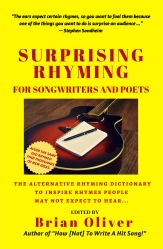 “SURPRISING RHYMING” – The Alternative Rhyming Dictionary for Songwriters and Poets – is available from Amazon as a US paperback, a UK paperback, and across Europe. It is also available as an eBook from Amazon’s Kindle store in the United States, the UK and Europe, as well as Apple’s iTunes Book Store, Barnes & Noble’s Nook Store and Rakuten’s KoboBooks.
![“HOW [NOT] TO WRITE A HIT SONG! - 101 COMMON MISTAKES TO AVOID IF YOU WANT SONGWRITING SUCCESS” is available from Amazon as a paperback and also as an eBook from Amazon’s Kindle Store, Apple's iTunes Store, Barnes and Noble's Nook store, and from KoboBooks.com.](https://thehitformula.com/wp-content/uploads/2013/05/how-not-to-write-a-hit-song-smashwords-cover-blog-widgit-188x282.jpg?w=145&h=218) A 5-star rated book at Amazon, “How [Not] To Write A Hit Song! – 101 Common Mistakes To Avoid If You Want Songwriting Success” is available from Amazon as a US paperback, a UK paperback and as an eBook from Amazon’s Kindle Store. It is also available from Apple’s iTunes Book Store, Barnes & Noble’s Nook store, and Rakuten’s KoboBooks.
A 5-star rated book at Amazon, “How [Not] To Write A Hit Song! – 101 Common Mistakes To Avoid If You Want Songwriting Success” is available from Amazon as a US paperback, a UK paperback and as an eBook from Amazon’s Kindle Store. It is also available from Apple’s iTunes Book Store, Barnes & Noble’s Nook store, and Rakuten’s KoboBooks.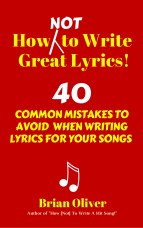 “How [Not] To Write Great Lyrics! – 40 Common Mistakes To Avoid When Writing Lyrics For Your Songs” is available from Amazon and Barnes & Noble as a US paperback, UK paperback and as an eBook from Amazon’s Kindle Store. It is also available from Apple’s iTunes Book Store, Barnes & Noble’s Nook store, and Rakuten’s KoboBooks.

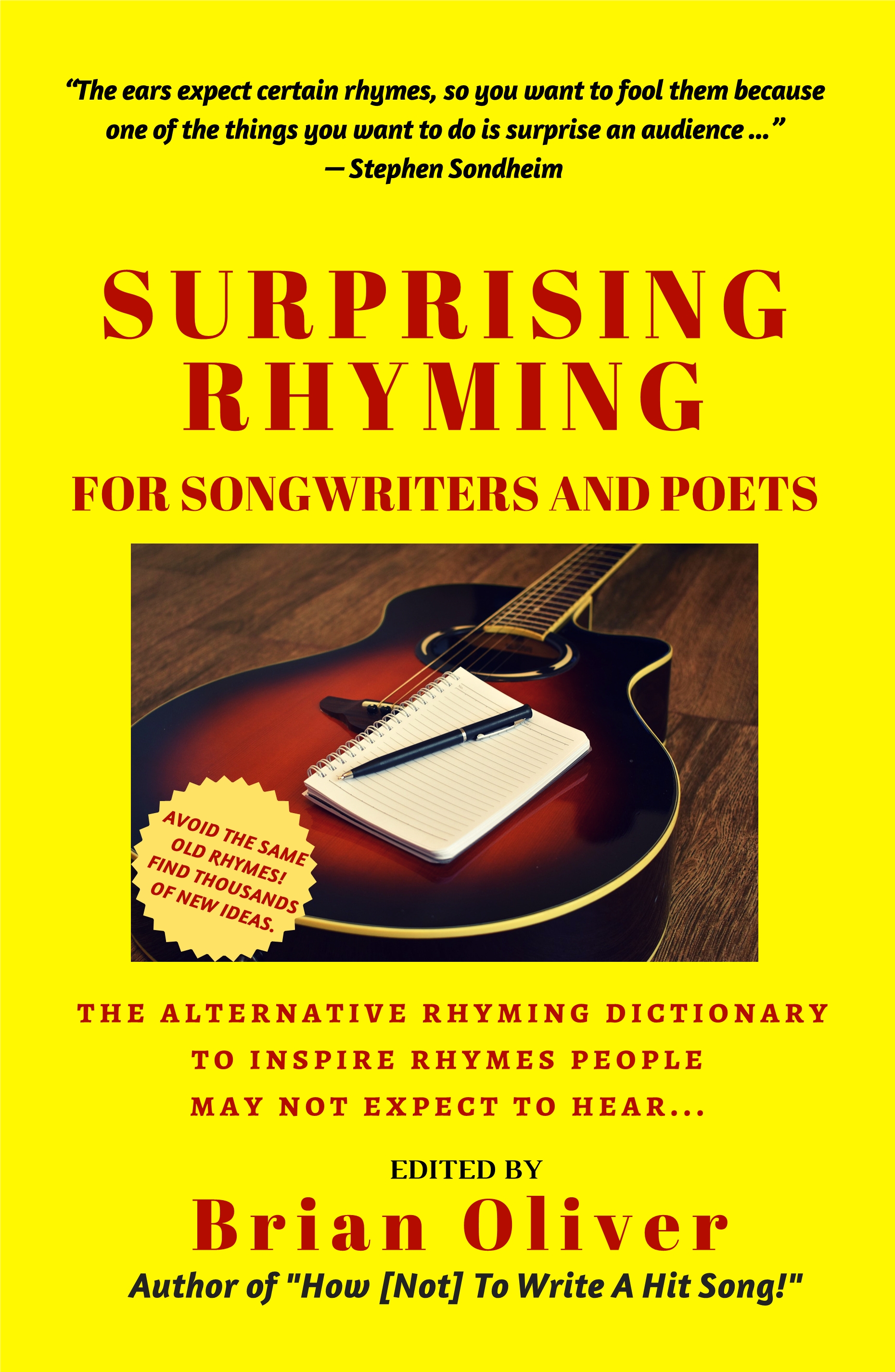 “SURPRISING RHYMING” – The Alternative Rhyming Dictionary for Songwriters and Poets – is available from Amazon as a US paperback, a UK paperback, and across Europe. It is also available as an eBook from Amazon’s Kindle store in the United States, the UK and Europe, as well as Apple’s iTunes Book Store, Barnes & Noble’s Nook Store and Rakuten’s KoboBooks.
![“HOW [NOT] TO WRITE A HIT SONG! - 101 COMMON MISTAKES TO AVOID IF YOU WANT SONGWRITING SUCCESS” is available from Amazon as a paperback and also as an eBook from Amazon’s Kindle Store, Apple's iTunes Store, Barnes and Noble's Nook store, and from KoboBooks.com.](https://thehitformula.com/wp-content/uploads/2013/05/how-not-to-write-a-hit-song-smashwords-cover-blog-widgit-188x282.jpg) A 5-star rated book at Amazon, “How [Not] To Write A Hit Song! – 101 Common Mistakes To Avoid If You Want Songwriting Success” is available from Amazon as a US paperback, a UK paperback and as an eBook from Amazon’s Kindle Store. It is also available from Apple’s iTunes Book Store, Barnes & Noble’s Nook store, and KoboBooks.
A 5-star rated book at Amazon, “How [Not] To Write A Hit Song! – 101 Common Mistakes To Avoid If You Want Songwriting Success” is available from Amazon as a US paperback, a UK paperback and as an eBook from Amazon’s Kindle Store. It is also available from Apple’s iTunes Book Store, Barnes & Noble’s Nook store, and KoboBooks.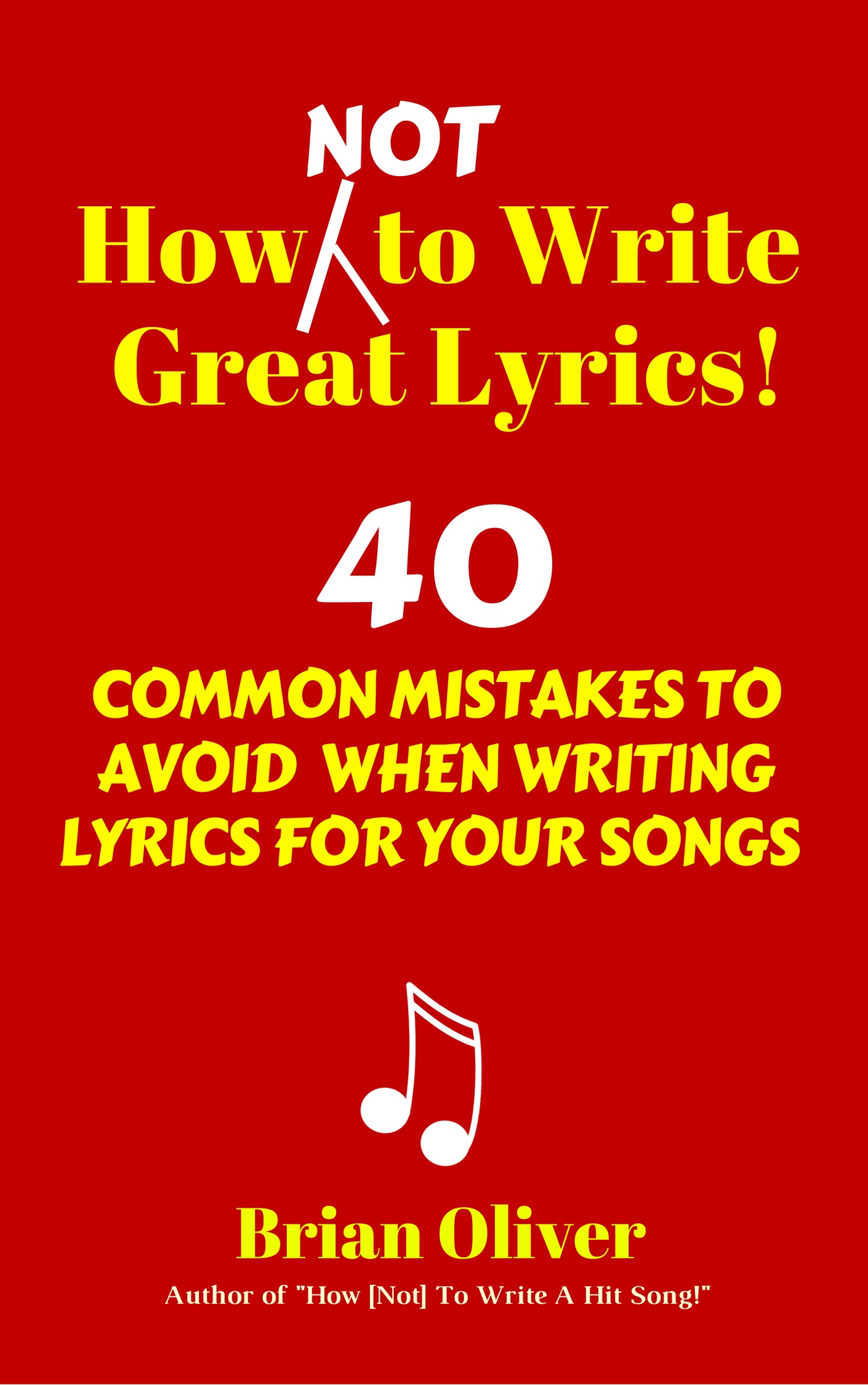 “How [Not] To Write Great Lyrics! – 40 Common Mistakes To Avoid When Writing Lyrics For Your Songs” is available from Amazon and Barnes & Noble as a US paperback, UK paperback and as an eBook from Amazon’s Kindle Store. It is also available from Apple’s iTunes Book Store, Barnes & Noble’s Nook store, and KoboBooks.

 Tom Odell’s beautiful song ‘Constellations’—from his 2016 album Wrong Crowd—opens with Tom talking to a girl in a busy bar and his lyrics vividly describe the scene. It’s a great example of why songwriters should always show listeners what is happening in their song, rather than just tell them …







 SONGWRITING: THE HIT FORMULA