For today’s young people, music is more than entertainment — it’s a language they instinctively connect with. Between the ages of 11 and 16, when emotions intensify and identity begins to take shape, learning to write songs can be one of the most powerful tools for personal growth.
But many parents aren’t aware of just how many benefits songwriting offers, or how accessible it can be with the right guidance.
A Healthy Outlet for Emotions
Adolescence is full of big feelings, and young people often struggle to express them clearly. Songwriting gives them a safe, structured way to explore what they’re experiencing. Turning emotions into lyrics or melody helps them process stress, understand themselves better, and communicate in a healthy, creative way.
The Young Person’s Easy Guide to Songwriting supports this emotional development by breaking the process into simple, friendly steps. It shows young writers how to shape their thoughts into verses, choruses, and hooks — without needing any music theory. This makes emotional expression feel achievable rather than intimidating.
Confidence Through Creativity
Finishing a song gives young people a powerful sense of achievement. They’ve created something original, meaningful, and entirely their own. That accomplishment builds confidence, especially for children who may not feel comfortable speaking up or performing publicly.
The Young Person’s Easy Guide to Songwriting reinforces this confidence by helping them complete real songs early in the learning process. With clear examples, worksheets, and step‑by‑step methods, young creators quickly discover that songwriting isn’t just for “talented” kids — it’s for anyone with curiosity and imagination.
Academic and Cognitive Benefits
Parents are often surprised to learn how strongly songwriting supports academic skills. Writing lyrics strengthens vocabulary, storytelling, and language rhythm. Organising verses and choruses develops pattern recognition and memory. Revising a song teaches problem‑solving and perseverance.
Because The Young Person’s Easy Guide to Songwriting avoids heavy theory and complex terminology, it allows young learners to focus on these core skills without feeling overwhelmed. They learn structure, clarity, and creative thinking in a way that supports schoolwork across subjects.
Identity, Imagination, and Personal Voice
Songwriting encourages young people to explore who they are. As they experiment with themes, stories, and musical ideas, they begin to discover their artistic voice — a crucial part of adolescent development.
The Young Person’s Easy Guide to Songwriting nurtures this exploration by giving them tools to write about what matters to them: friendships, challenges, dreams, humour, or everyday experiences. It helps them build imaginative worlds, express personal truths, and develop a sense of identity through creativity.
Social Connection and Collaboration
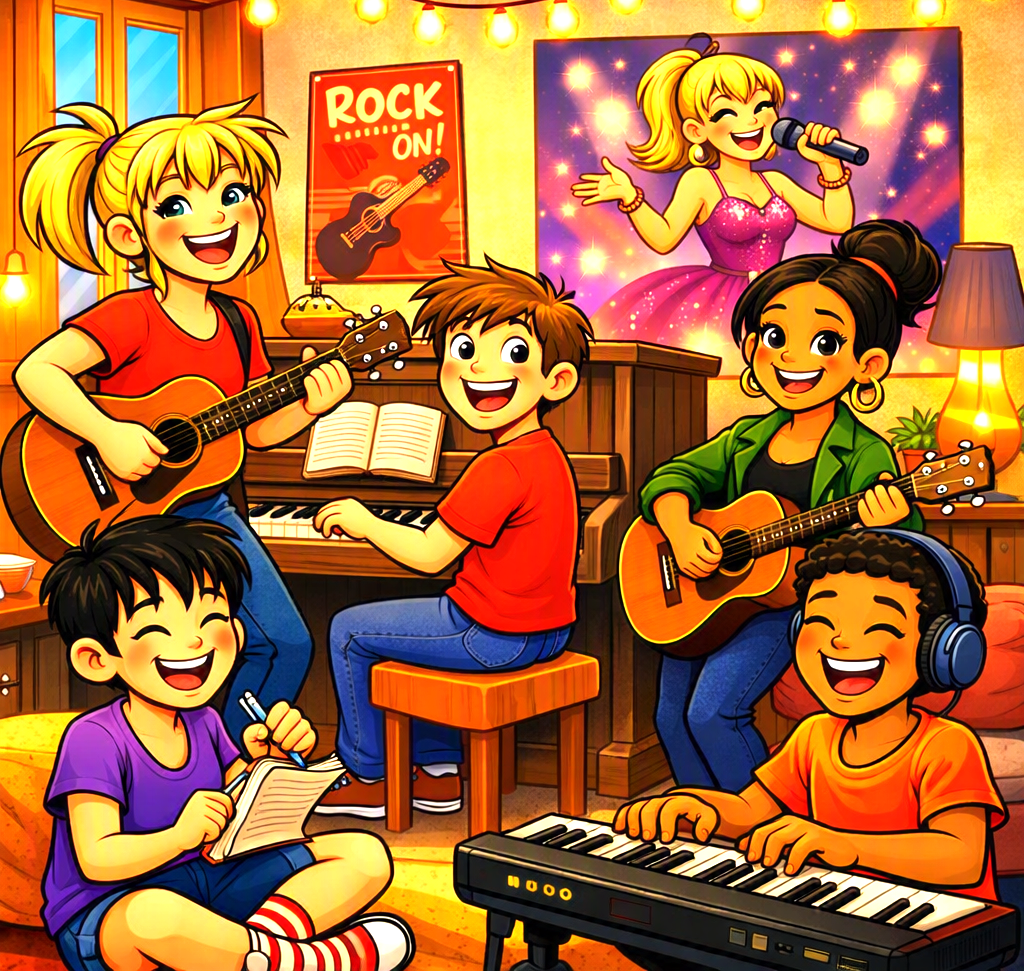
Although songwriting can be deeply personal, it also opens doors to collaboration. Many young people enjoy writing with friends, sharing ideas, and building songs together. This teaches teamwork, communication, and empathy.
The accessible, non‑technical approach of The Young Person’s Easy Guide to Songwriting makes collaboration easier. Young writers can share methods, compare ideas, and work together without needing specialist knowledge or instruments.
A Guide Designed for 11-16 year olds — At Last
Many songwriting books for young people are aimed at 8–10‑year‑olds, offering playful classroom activities that don’t meet the needs of older children. Meanwhile, adult songwriting guides are too complex, too technical, and too theory‑heavy for 11–16‑year‑olds.
The Young Person’s Easy Guide to Songwriting fills this gap. It treats songwriting seriously enough for motivated young creators, yet keeps the process simple, friendly, and confidence‑building. No music theory required — just curiosity, imagination, and a desire to create.
A Lifelong Skill…
Whether your child dreams of becoming a songwriter or simply wants a creative outlet, learning to write songs gives them tools they’ll use for life: emotional clarity, confidence, creativity, communication, and resilience.
The Young Person’s Easy Guide to Songwriting helps them begin that journey in the most accessible, encouraging way possible — one song at a time.
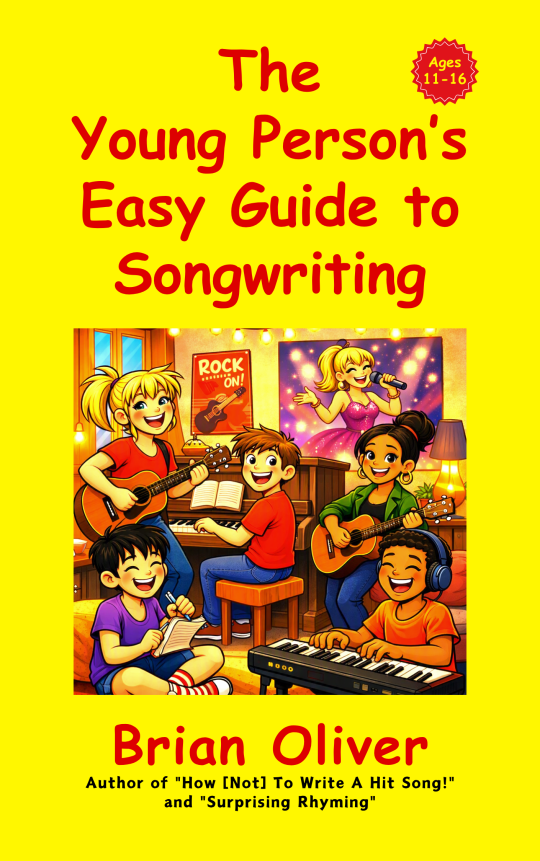
The Young Person’s Easy Guide to Songwriting is available from Amazon as a paperback or eBook in the United States,UK, Ireland, Canada, Australia, and across Europe. It is also available as an eBook from Apple Books.
“HOW [NOT] TO WRITE SONGS IN THE STREAMING AGE – 40 MISTAKES TO AVOID IF YOU WANT TO GET MORE STREAMS” - This book shows how the dominance of music streaming is having a profound impact on songwriting and the structure of songs. Songs that connect in the streaming world are no longer the same as songs that work on traditional media, like radio. Successful streaming now requires a different type of song. This means songwriters who want more plays on streaming platforms need to rethink their songwriting approach in order to meet the specific needs of streaming audiences. This book aims to provide a better understanding of the new building blocks of song structure in the streaming age. It examines essential elements found in the construction, melodies and lyrics of the biggest streaming hits – and highlights the most common errors made when these key components are built into a song. To help new songwriters avoid such mistakes in their own songs, the book provides 40 insightful tips and a comprehensive Checklist for creating more streaming-friendly songs. The book is now available from Amazon as a paperback and eBook, and also from leading eBook retailers like Apple Books, Kobo and Barnes & Noble.
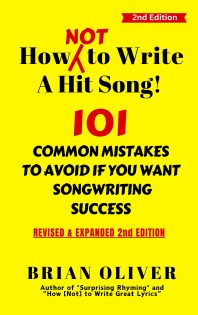
‘HOW (NOT) TO WRITE A HIT SONG! – 101 COMMON MISTAKES TO AVOID IF YOU WANT SONGWRITING SUCCESS’
With a 5-star rating at Amazon, this revised and expanded Second Edition of “How [Not] To Write A Hit Song!” takes a close look at the essential elements consistently found in the structure, melodies, and lyrics of hit songs today.
The music industry has been going through major changes in recent years, largely driven by the dominance of the music streaming companies. Streaming is now impacting the way songs are being written and recorded. And it’s changing the whole methodology of songwriting. This expanded Second Edition examines how these changes are affecting the key elements found in all hit songs. The book highlights the most common errors made when these essential components are built into a song—so that new writers can try to avoid such mistakes in their own songs.
Most writers have had to endure the disappointment of having their songs rejected, and ended up asking: “Could I have done more to make my songs better?”. “How [Not] To Write A Hit Song!” aims to help writers recognize weaknesses in their songs, so they can re-work them, make them stronger, and hopefully achieve the breakthrough they’re striving for.
The book includes a detailed checklist of 101 common mistakes that writers can measure their own songs against.
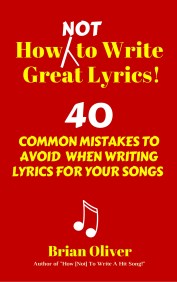
“HOW (NOT) TO WRITE GREAT LYRICS! 40 COMMON MISTAKES TO AVOID WHEN WRITING LYRICS FOR YOUR SONGS”
The 40 most common lyric writing mistakes are exposed in this new book by experienced music publisher and music consultant Brian Oliver.
Written in an easy, non-technical style, the book identifies the most frequent causes of lyric writing problems and aims to help aspiring songwriters steer clear of the many traps that they can easily fall into when writing lyrics for their songs.
“How [Not] To Write Great Lyrics!” gives new writers a wide range of valuable advice – from how to prevent common errors in the basic construction of their song lyrics … through to the perils of making bad choices when it comes to titles, opening lines, lyrical hooks, verb selection, clichés, rhyming patterns, and many other issues.
The book includes a comprehensive checklist of more than 100 potential hazards that writers can measure their own lyrics against.
“SURPRISING RHYMING FOR SONGWRITERS AND POETS -THE ALTERNATIVE RHYMING DICTIONARY”
With more new songs being written than ever before, songwriters are finding it harder to sound original and craft rhymes that have not already been used. “SURPRISING RHYMING” is a new kind of rhyming dictionary that aims to make it easier for writers to avoid clichés and create rhymes people may not have heard before.
Based on an in-depth study of the ingenious rhymes used by some of the world’s greatest songwriters and lyricists, this book offers an astonishing array of thousands of alternative rhyme options. It contains rhyme types much broader than those found in traditional rhyming dictionaries which tend to stick to ‘perfect’ rhymes. Instead, it focuses on ‘imperfect’ rhymes that are less predictable than ‘pure’ rhymes—and are therefore more likely to surprise an audience. The book also includes many new words that have been added to standard dictionaries in recent years.
With 624 pages, the book is laid out clearly to make it quick and easy to find the perfect word to achieve a memorable rhyme. There are separate sections for one-, two- and three-syllable rhymes, along with many useful tips on rhyming.
“SURPRISING RHYMING” is available from Amazon as a paperback and an eBook. It’s also available as an eBook from Apple’s iTunes Store, Barnes & Noble and Rakuten’s KoboBooks.