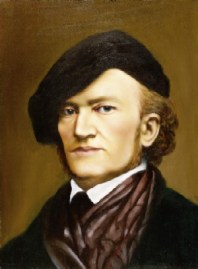
 A recent study by researchers in Germany suggests that health problems can affect the style, creativity and inspiration of songwriters and composers.
Studies have already shown how Beethoven’s progressive deafness resulted in his three different (and increasingly poignant) styles. But in a paper – published in the British Medical Journal (BMJ) – researchers show how German composer Richard Wagner used his disabling migraines and headaches to compose his operas.
Wagner’s medical problems have often been investigated and he even described his headaches and symptoms as the “main plague of his life”. However, the latest study closely examines the structure of Wagner’s opera Siegfried, the third part of the Ring Cycle, to highlight how the composer’s ailments influenced his work.
The researchers say Siegfried opens with a pulsating thumping which gradually becomes more intense until it reaches an “almost painful pulsation”. At the climax, the main character cries out “Compulsive plague! Pain without end!” which the researchers believe is a representation of a “painful, pulsating sensory migraine episode”.
In his memoirs, Wagner gives an account of the symptoms he had in September 1865, around the time he composed Siegfried. The composer openly voiced his suffering caused by the “nervous headaches” he had while composing this opera.
Wagner’s depiction of his migraines included a “scintillating, flickering, glimmering melody line with a zig-zag pattern” while a main character sings of “Loathsome light!” and “rustling and humming and blustering”. The researchers say the music has all the characteristics of a typical migraine and the experimental flicker frequency gives “important clues” about the performance speed intended by Wagner.
The researchers conclude that, although Richard Wagner was “severely burdened” by migraine, he used his suffering creatively – “letting future generations take part in his emotions and perceptions”.
There is a video extract from the study’s findings HERE…
# # # #

“How [Not] To Write A Hit Song! – 101 Common Mistakes To Avoid If You Want Songwriting Success” is available from Amazon as a US paperback, UK paperback and as an eBook from Amazon’s Kindle Store, Apple’s iTunes Store (Books/Arts & Entertainment/Music), Barnes & Noble’s Nook store, and from KoboBooks.
Read a FREE sample of the book HERE (USA), HERE (UK), HERE (Australia) and HERE (Canada).
 Following on from our recent story about the John Lewis ‘Reworked’ competition, Keane have chosen singer-songwriter Matthew Fearon from Leicester as the winner.
The ‘ReWorked’ competition invited aspiring artists to upload a video of their version of Keane’s 2004 hit, ‘Somewhere Only We Know’. The song, as sung by Lily Allen, provides the soundtrack for John Lewis’s 2013 Christmas TV advert which features the animated story of best friends Bear and Hare at Christmas.
Matthew Fearon will now receive an all-expenses paid trip to London where he will record ‘Somewhere Only We Know’ with Lily Allen’s producer Paul Beard. The recording will then be featured in a special 90-second version of the advert which will be shown live on ITV1 on Christmas Day.
Fearon’s winning video was appropriately filmed in a John Lewis store whilst he sat on a footstool entertaining the Christmas shoppers. Here is the video:
# # # #
“How [Not] To Write A Hit Song! – 101 Common Mistakes To Avoid If You Want Songwriting Success” is available from Amazon as a paperback, or as an eBook from Amazon’s Kindle Store, Apple’s iTunes Store (Books/Arts & Entertainment/Music) and Barnes & Noble’s Nook store.
Read a FREE sample of the book HERE (USA), HERE (UK), HERE (Australia) and HERE (Canada).
 Sir Paul McCartney recently revealed that songwriting has often helped him get through emotional and dark times. He told Mojo magazine: “I think it’s good when you’re in a dark period and the song is your psychiatrist. It’s your therapy.”
Now, Britney Spears has revealed that writing songs for her new album Britney Jean was like therapy for her too.
The 32-year-old singer split from her former fiancé Jason Trawick when she was working on the album and, she says, some of the new tracks are about the heartache she experienced.
While she understands some people might prefer to keep those feelings private, Britney is happy to lay herself bare through her songs.
“Actually I really kinda had no choice,” she recently told MTV News. “At the time I was going through a breakup that was kind of public, and everyone knew about it. And I felt like, it’s not a secret, so why not write about it and say how I’m feeling about it and what it feels like?”
She added: “I feel like when you write you do depict what you’re going through in your life, and that’s what I was going through at the time. So it just made sense for me, therapeutically, to write it out and get it out.”
 In a recent interview with Mojo, Sir Paul McCartney said: “When you’re really upset about something, going away and putting it in your song you come out of that cupboard, toilet or basement and go, ‘I really feel better’. You’ve actually exorcised the demon. It’s one of the great joys of songwriting.”
However, it is important to avoid being too personal and too insular in your ‘therapeutic’ writing. If you still want your songs to be successful commercially, they should always be about your audience—not just you.
That means writing about experiences, hardships and situations that everyone can relate to. By writing about something that listeners experience in their own lives, you can touch people’s emotions. And if you can make the listener feel something, it’s the sign of a good song.
As US singer-songwriter Jackson Browne once remarked: “It’s all about reaching inside to something that you have in common with many.”
# # # #
“How [Not] To Write A Hit Song! – 101 Common Mistakes To Avoid If You Want Songwriting Success” is available from Amazon as a paperback, or as an eBook from Amazon’s Kindle Store, Apple’s iTunes Store (Books/Arts & Entertainment/Music) and Barnes & Noble’s Nook store.
Read a FREE sample of the book HERE (USA), HERE (UK), HERE (Australia) and HERE (Canada).
 We constantly hear about young singer-songwriters such as Taylor Swift and Katy Perry writing emotionally wrenching songs about their past loves and broken relationships. And other young writers find new ways of expressing the emotions associated with issues they’re experiencing for the first time—such as finding yourself, friendships, coming of age, fitting in, and growing up.
But what do songwriters turn to for inspiration when they get older?
Janis Ian was only 22 when she wrote her classic song ‘At Seventeen’—a groundbreaking, poignant commentary on adolescent cruelty and teenage angst. Would she be able to write that song now, 40 years later?
The answer, according to award-winning Nashville songwriter Brett James, is to learn how to think like a 15-year-old again.
In an interview with Viacom’s country music TV channel CMT, 45-year-old James explained that songwriters sometimes need to re-discover the adolescent inside them in order to come up with a great idea that hasn’t been written about before.
“You always want to keep that freshness, so you have to feel like a 15-year-old kid who has never written a song—sometimes it’s important to sit down with that attitude,” said James whose number one hits include Carrie Underwood’s Grammy Award-winning ‘Jesus, Take the Wheel’, ‘Who I Am’ by Jessica Andrews and Martina McBride’s ‘Blessed’.
James told CMT: “Sometimes we rehash and put twists on ideas. But there have been a lot of songs written in the world, so it’s tough to find the one that no one’s thought of yet. When you can write something truly original, the world takes notice.”
To achieve major success, songs need to be about issues and emotions that everyone is familiar with—and the lyrics should be honest, believable and heartfelt so that people can easily relate to them. If your lyrics don’t come across as genuine and relevant, listeners may find it hard to connect with your song.
Do you ever try to find inspiration, as Brett James suggests, by taking yourself back to when you were first starting out and every new chord, every new chord progression, every new song title, and every new way of rhyming a lyric was a wondrous discovery?
# # # #
“How [Not] To Write A Hit Song! – 101 Common Mistakes To Avoid If You Want Songwriting Success” is available from Amazon as a US paperback, UK paperback and as an eBook from Amazon’s Kindle Store, Apple’s iTunes Store (Books/Arts & Entertainment/Music), Barnes & Noble’s Nook store, and from KoboBooks.
Read a FREE sample of the book HERE (USA), HERE (UK), HERE (Australia) and HERE (Canada).
 Take That’s Gary Barlow has announced that the second single from his new solo album Since I Saw You Last will be ‘Face to Face’ on which he duets with his long-time friend and songwriting hero Elton John.
Gary has also revealed that ‘Face to Face’ was written as a thank-you note to Elton John for sticking by him during his wilderness years after Take That split up in 1996 and his solo career flopped first time around in the late 1990s. The song is also a pointed riposte to Gary’s friends and colleagues who deserted him and treated him like a pariah during that period.
“It’s a respect song,” he recently told the Daily Telegraph. “I can count on the fingers of one hand the people who kept in touch with me when nobody else wanted to know me and Elton was one of them. I’ll never forget that.”
The song and video for ‘Face To Face’ were recorded and filmed in only four hours at London’s Abbey Road Studios earlier this year, with Gary and Elton completing their vocals in only a handful of takes.
Here’s the official video for ‘Face to Face’ which will be released on January 20, 2014:
“How [Not] To Write A Hit Song! – 101 Common Mistakes To Avoid If You Want Songwriting Success” is available from Amazon as a paperback, or as an eBook from Amazon’s Kindle Store, Apple’s iTunes Store (Books/Arts & Entertainment/Music) and Barnes & Noble’s Nook store.
Read a FREE sample of the book: HERE (USA), HERE (UK), HERE (Australia) and HERE (Canada).
# # # #
 How would you like to become Lily Allen on Christmas Day?
John Lewis Retail, which operates 40 John Lewis stores across the UK, is running a YouTube competition – called ‘ReWorked’ – which will give one aspiring artist a chance to take Lily Allen’s place in a special TV advert to be aired nationwide in the UK on Christmas Day.
John Lewis’s popular 2013 Christmas TV advert features the animated story of best friends Bear and Hare at Christmas, set to Lily Allen’s cover of Keane’s 2004 hit, ‘Somewhere Only We Know’.
All you have to do to take part in the ‘ReWorked’ competition is to upload a video of your version of ‘Somewhere Only We Know’ at www.youtube.com/JohnLewisRetail.
The competition closes on December 3, 2013 and a winner will be chosen by December 6, 2013 by a panel that includes a member of Keane.
If you win, you’ll be given an all-expenses paid trip to London where you will record the track in a professional studio with producer Paul Beard (who also produced Lily Allen’s ‘Somewhere Only We Know’ cover).
Your recording will then provide the soundtrack for a special 90-second version of the advert which will be shown live on ITV1 on Christmas Day.
Craig Inglis, marketing director at John Lewis, says: “In previous years, we’ve been overwhelmed by the number of people sending and uploading their versions of songs from our Christmas ads. This year, with the support of Lily Allen and Keane, we want to give someone a Christmas they’ll never forget – the chance to hear their song on our advert on Christmas Day.”
He adds: “Absolutely anybody can take part. We’re really looking forward to seeing the entries come in!”
Here is the 90-second version of the John Lewis Christmas ad that will be used in the ‘ReWorked’ competition:
“How [Not] To Write A Hit Song! – 101 Common Mistakes To Avoid If You Want Songwriting Success” is available from Amazon as a paperback, or as an eBook from Amazon’s Kindle Store, Apple’s iTunes Store (Books/Arts & Entertainment/Music) and Barnes & Noble’s Nook store.
Read a FREE sample of the book HERE (USA), HERE (UK) or HERE (Australia).
 Most experienced songwriters recognize that if a song is to become a great song, it must be able to reach out and touch listeners and stimulate an emotional response within them. It must make them feel something.
Katy Perry calls this her ‘goose bump test’.
“There’s this test that I do after a song’s complete and you’ve tracked some vocals,” Katy recently told MTV. “If every time you hear it, it gives you goose bumps then it’s hitting an emotional chord inside of you that’s really important.”
Katy cites her latest single ‘Unconditionally’ as an example of this. She felt inspired to sit down and write the song shortly after travelling to Madagascar with UNICEF. Touched by the unconditional love that the children she met had for each other – despite their poverty – she decided to pen some lyrics about what it means to care for someone in the purest form.
Katy says that ‘Unconditionally’ went on to pass her ‘goose bump test’ and it is her favourite song on her latest album Prism.
Try giving your own songs the ‘goose bump test’ with the people closest to you, someone who will give you an honest opinion. If the song doesn’t genuinely move them in its rawest, stripped-down form—one vocal and a single guitar or piano—then the song has failed.
Don’t fool yourself into thinking a magical transformation will take place in the studio if you decide to spend money on making a demo of the song. Trying to create an emotional connection with the aid of lots of production frills won’t fool listeners (or music publishers or A&R execs!). They always look to the song inside the recording.
As Neil Sedaka once observed: “The most challenging task for a songwriter is to write a simple tune but still bring an emotional feeling to it … No frills. No production gimmicks.”
# # # #
“How [Not] To Write A Hit Song! – 101 Common Mistakes To Avoid If You Want Songwriting Success” is available from Amazon as a paperback, or as an eBook from Amazon’s Kindle Store, Apple’s iTunes Store (Books/Arts & Entertainment/Music) and Barnes & Noble’s Nook store.
Read a FREE sample of the book HERE (USA), HERE (UK), HERE (Australia) and HERE (Canada).
# # # #
 “Rhyming doesn’t have to be exact anymore,” Bob Dylan told Paul Zollo of American Songwriter magazine in a 2012 interview. “It gives you a thrill to rhyme something and you think, ‘Well, that’s never been rhymed before’. Nobody’s going to care if you rhyme ‘represent’ with ‘ferment’, you know. Nobody’s gonna care.”
Dylan once admitted to Rolling Stone magazine that he stunned himself when he wrote the first two lines of ‘Like a Rolling Stone’ and rhymed “kiddin’ you” with “didn’t you”. “It just about knocked me out,” he said.
Historically, many classic pop songs from the rock era have tended to feature ‘perfect’ rhymes where a one-syllable word is rhymed with another one-syllable word (such as ‘kiss’ and ‘miss’), or where two words have the same spelling in the last syllable (such as ‘love and ‘above’).
These days, it’s best to steer clear of perfect rhymes, if you can, because rhymes that are too exact can often limit the expression of true emotion.
You can create a much greater impact by rhyming words that don’t have the same combination of letters but sound similar (such as ‘clown’ and ‘around’, or ‘made’ and ‘late’). This is because sound-alike words tend to engage listeners more than words with the same spelling, as in the case of Dylan’s “kiddin’ you” and “didn’t you”.
Using ‘false’ rhymes that create word pictures – or which convey what you want to say more accurately – can often be much more effective than pure rhymes.
It’s not enough to simply go through the alphabet looking for words that rhyme, irrespective of whether or not the chosen word helps to underpin the meaning of your song and drive the story forward. This approach usually results in clichéd rhymes that we’ve all heard many times before.
You can surprise the listener by having the rhyme fall on the second or third syllable of a multi-syllable word instead of at the end (for example, put the rhyme on the syllable that is stressed most strongly in normal speech, such as ‘unachievable’ and ‘believable’).
You can also rhyme a multi-syllable word with a word that only has one syllable (such as ‘sublime’ and ‘time’). This device can make a lyric much more interesting.
So don’t weaken a potentially good song by going for the easiest and most obvious rhyme. These days, lyricists have to be much more adventurous. Challenge yourself and make your rhymes less predictable.
As the great Stephen Sondheim once remarked: “The ears expect certain rhymes, so you want to fool them because one of the things you want to do in a song is surprise an audience.”
# # # #
 “SURPRISING RHYMING” – The Alternative Rhyming Dictionary for Songwriters and Poets – is available from Amazon as a US paperback, a UK paperback, and also across Europe. Read a FREE sample of the book HERE (USA) and HERE (UK).
![“HOW [NOT] TO WRITE A HIT SONG! - 101 COMMON MISTAKES TO AVOID IF YOU WANT SONGWRITING SUCCESS” is available from Amazon as a paperback and also as an eBook from Amazon’s Kindle Store, Apple's iTunes Store, Barnes and Noble's Nook store, and from KoboBooks.com.](https://thehitformula.com/wp-content/uploads/2013/05/how-not-to-write-a-hit-song-smashwords-cover-blog-widgit-188x282.jpg?w=138&h=208)
A 5-star rated book at Amazon, “How [Not] To Write A Hit Song! – 101 Common Mistakes To Avoid If You Want Songwriting Success” is available from Amazon as a US paperback, a UK paperback and as an eBook from Amazon’s Kindle Store. It is also available from Apple’s iTunes Store (Books/Arts & Entertainment/Music), Barnes & Noble’s Nook store, and KoboBooks.
Read a FREE sample of the book HERE (USA), HERE (UK), HERE (Australia) and HERE (Canada).
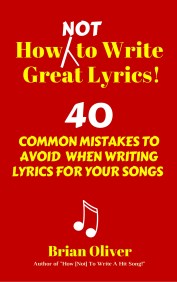
 “How [Not] To Write Great Lyrics! – 40 Common Mistakes To Avoid When Writing Lyrics For Your Songs” is available from Amazon and Barnes & Noble as a US paperback, UK paperback and as an eBook from Amazon’s Kindle Store. It is also available from Apple’s iTunes Store (Books/Arts & Entertainment/Music), Barnes & Noble’s Nook store, and KoboBooks.
Read a FREE sample of the book HERE (USA), HERE (UK), HERE (Australia) and HERE (Canada).
 The BPI has announced that composer Hans Zimmer will receive the Outstanding Contribution To Music Award at this year’s Classic BRIT Awards. The event will take place on Wednesday, 2 October 2013 at London’s Royal Albert Hall.
The ceremony will include a special tribute to the works of Zimmer.
In his 30-year career, he has scored over 100 films and won a multitude of awards, including an Academy Award, two Golden Globes, four Grammys and a Classic BRIT award.
His works have included Gladiator, The Lion King, Thelma and Louise, Mission Impossible 2, Pirates of the Caribbean, The Da Vinci Code, Driving Miss Daisy, Inception, Rain Man, The Thin Red Line, As Good As It Gets, True Romance, The Last Samurai, and most recently Man of Steel and The Dark Knight Rises.
Zimmer has also worked in other areas, such as the computer games industry, and compiled the soundtrack for Activision’s Call of Duty: Modern Warfare 2.
Co-chairmen of The Classic BRIT Awards committee Dickon Stainer (president of Decca Records) and Barry McCann (director of Avie Records), said: “We are absolutely delighted to be honouring the outstanding talent of Hans Zimmer with this award.
“Hans Zimmer’s recent work, including Inception, has been a dominant force for classical music specifically in the digital download era.
“It is only appropriate that four years on from his 2009 win for Soundtrack of the Year for The Dark Knight he should receive the Outstanding Contribution to Music at this year’s ceremony.”
# # # #
“How [Not] To Write A Hit Song! – 101 Common Mistakes To Avoid If You Want Songwriting Success” is now available from Amazon’s Kindle Store for only US$7.22 or GB£4.78.
Read a FREE sample of the book HERE (USA), HERE (UK) or HERE (Australia).
Also available from Apple’s iTunes Store (Books/Arts & Entertainment/Music), and Barnes & Noble’s Nook store.
While Taylor Swift recently commented that she thinks songs about people who are heartbroken tend to make the best and most interesting songs, Katy Perry insists that songwriters should always try to include a sense of humour in their songs – no matter what the song is about.
“I think people appreciate a songwriter who shows different sides,” says Katy. “The whole angst thing is cool, but if that’s all you’ve got, it’s just boring. Everything I write, whether it’s happy or sad, has a sense of humour to it.”
Katy once again demonstrates her quirky sense of fun on her new single ‘Roar’ which is released on September 8. It’s the first single from her new studio album PRISM which will be released on October 22.
Written with Bonnie McKee and produced by Max Martin and Lukasz Gottwald (aka Dr. Luke), ‘Roar’ still manages to balance the uplifting feel of the track with a serious message. ”It’s a bit of a self-empowering type of song,” Katy explains. “I wrote it because I was sick of keeping all these feelings inside and I’m now speaking up for myself.”
Even the lyric video for ‘Roar’ adds to the fun by cleverly replacing many of the words with emoticons. Take a look …
# # # #
“How [Not] To Write A Hit Song! – 101 Common Mistakes To Avoid If You Want Songwriting Success” is available from Amazon as a paperback, or as an eBook from Amazon’s Kindle Store, Apple’s iTunes Store (Books/Arts & Entertainment/Music) and Barnes & Noble’s Nook store.
Read a FREE sample of the book HERE (USA), HERE (UK), HERE (Australia) and HERE (Canada).



 SONGWRITING: THE HIT FORMULA