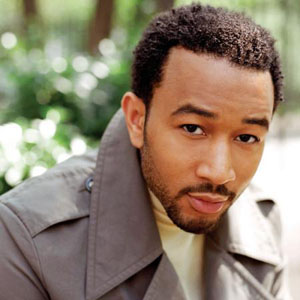
John Legend believes gaining success as a songwriter is as much about working hard as it is talent.
“It sounds obvious, but there’s this mistaken belief that everything is about talent, but talent has to be cultivated and developed,” he once told Q magazine. “If it’s not nurtured, pushed and challenged it’s not going to happen.”
Legend says he’s proud of the fact that he started work on his career when he was little more than a toddler and insists he will never apologise for being demanding. “I was four and I begged my mom to get me piano lessons,” he told Q. “I was a precocious little kid. There was a lot of music in our house so I think me wanting to play was me trying to be a part of what was going on. It was a chance to perform.”
With his music inspired by the classic soul and R&B music he grew up listening to, Legend says his songwriting process is “almost the exact opposite” of how most other writers work. He believes the music should drive the lyrics.
“Some people start from a poetry base,” he says. “They’ll write a bunch of lyrics, then try to put them to music. I try to develop a compelling musical idea and make the words fit into it.”
He explains: “I usually start playing a melody and find the chords I like. Then I start singing something to it to see what works.
“I usually write the chorus first because that helps guide me into where I want the verses to go. Then I start fooling around with chord progressions for the verse.”
Most established songwriters would agree with John Legend that hard work is the key to success. The initial spark that ignites a song idea is a gift. From then on, it’s all about putting in the hours to get it right. And it calls for an exceptional level of self-motivation and self-belief, as well as talent.
The truly great songwriters just make it look easy. In reality, though, they have to put in hundreds of hours of hard work—making many mistakes along the way—in order to hone their talent and achieve their greatness.
Diane Warren, one of the most successful female songwriters of all time, says she spent 20 years writing six days a week, 10-12 hours a day before she felt she could finally take the occasional weekend off!
# # # #
“How [Not] to Write Songs in the Streaming Age – 40 Mistakes to Avoid If You Want to Get More Streams” is available from Amazon as a US paperback, a UK paperback, a Canada paperback, an Australia paperback, and across Europe. It is also available as an eBook from Amazon’s Kindle store in the United States, the UK, Canada, Australia, and across Europe—as well as Apple Books, Barnes & Noble and Rakuten’s KoboBooks.
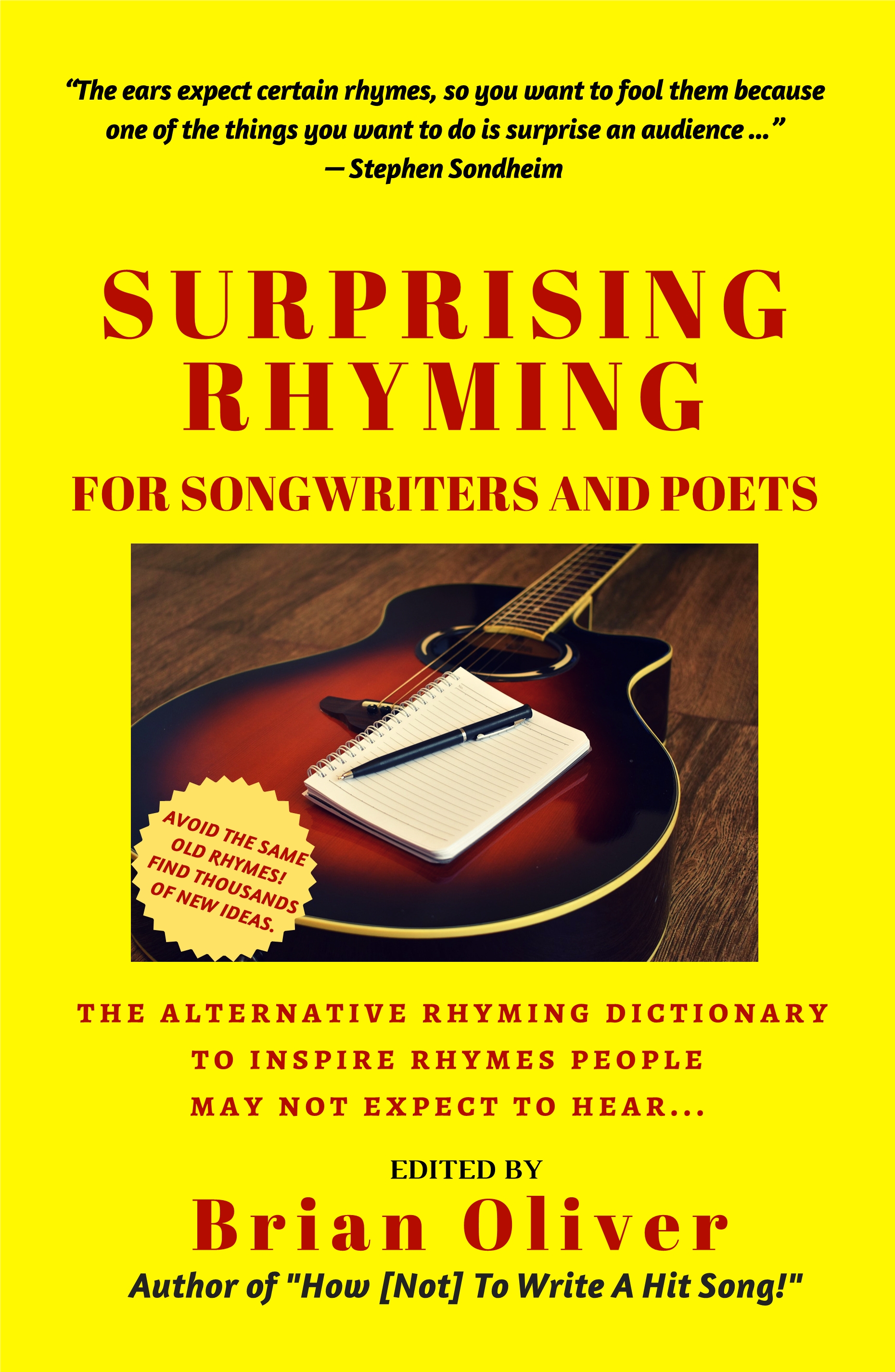
“SURPRISING RHYMING” – The Alternative Rhyming Dictionary for Songwriters and Poets – is available from Amazon as a US paperback, a UK paperback, and across Europe. It is also available as an eBook from Amazon’s Kindle store in the United States, the UK and Europe, as well as Apple’s iTunes Book Store, Barnes & Noble’s Nook Store and Rakuten’s KoboBooks.
A 5-star rated book at Amazon, “How [Not] To Write A Hit Song! – 101 Common Mistakes To Avoid If You Want Songwriting Success” is available from Amazon as a US paperback, a UK paperback and as an eBook from Amazon’s Kindle Store. It is also available from Apple’s iTunes Book Store, Barnes & Noble’s Nook store, and Rakuten’s KoboBooks.
“How [Not] To Write Great Lyrics! – 40 Common Mistakes To Avoid When Writing Lyrics For Your Songs” is available from Amazon and Barnes & Noble as a US paperback, UK paperback and as an eBook from Amazon’s Kindle Store. It is also available from Apple’s iTunes Book Store, Barnes & Noble’s Nook store, and Rakuten’s KoboBooks.
“I think we have to be honest in our songs. I always quote Nina Simone that ‘it’s an artist’s duty to reflect the times that you’re living in.’ It doesn’t mean that every song has to be political, but it does mean you should be honest with how you’re feeling and what’s important to you …”
A 5-star rated book at Amazon, “How [Not] To Write A Hit Song! – 101 Common Mistakes To Avoid If You Want Songwriting Success” is available from Amazon as a US paperback, a UK paperback and as an eBook from Amazon’s Kindle Store. It is also available from Apple’s iTunes Store (Books/Arts & Entertainment/Music), Barnes & Noble’s Nook store, and KoboBooks.
“How [Not] To Write Great Lyrics! – 40 Common Mistakes To Avoid When Writing Lyrics For Your Songs” is available from Amazon and Barnes & Noble as a US paperback, UK paperback and as an eBook from Amazon’s Kindle Store. It is also available from Apple’s iTunes Store (Books/Arts & Entertainment/Music), Barnes & Noble’s Nook store, and KoboBooks.
Etta James’s ‘At Last’ is Spotify’s most popular ‘first dance’ song
Many songwriters dream of being able to come up with an evergreen song that will still mean something special to listeners in years to come (and, ideally, keep earning royalties for years to come!).
One example of this is the kind of song that newly married couples choose for their ‘first dance’ at their wedding celebrations—a song that will always bring back those ‘special day’ feelings for them.
Now, leading music streaming service Spotify has unveiled a list of the world’s 10 most popular ‘first dance’ wedding songs, based on the listening choices made by many of its 40 million active users across 56 countries.
Spotify studied over 30,000 wedding-themed playlists and also analyzed 12,000 single-track playlists named ‘First Dance’ in order to identify listeners’ most popular wedding choices.
According to Spotify, the world’s most popular ‘first dance’ song is Etta James’s 1960 classic ‘At Last’ which was originally written by Mack Gordon and Harry Warren in 1941 for the film musical Orchestra Wives (performed in the movie by Glenn Miller and his orchestra).
Here is Spotify’s ‘First Dance’ Top 10:
1. Etta James – ‘At Last’ 2. Jason Mraz – ‘I Won’t Give Up’ 3. Ray LaMontagne – ‘You Are the Best Thing’ 4. John Legend – ‘All of Me’ 5. Jack Johnson – ‘Better Together’ 6. Christina Perri – ‘A Thousand Years’ 7. Michael Buble – ‘Everything’ 8. Bright Eyes – ‘First Day Of My Life’ 9. Brad Paisley – ‘Then’ 10. Adele – ‘Make You Feel My Love’
If you can write a song that becomes someone’s ‘special song’ with a lyrical message and melody that will always remind them of a particular day (such as their wedding), then it is indeed a great achievement.
When Grammy Award-winner Drake released his 2013 single ‘Hold On, We’re Going Home’ (subsequently covered by the Arctic Monkeys), he hoped the song would go on to become a “timeless” wedding song that would still be played at nuptials in years to come.
“I thought it would be great if we had a record that was still played at weddings in ten years … something that just has timeless writing and a timeless melody,” he told MTV News at the time.
Burt Bacharach shares this view. “I like to write songs that will last,” he once remarked. “Once a record is out of the charts it’s dead, as a record. But if it’s a good song it’ll stay around.”
And there are solid scientific findings to support this ‘long-lasting’ approach to songwriting.
In 2008, researchers at the University of Leeds in England found that music has a powerful influence on the storage and retrieval of long-term memories. A piece of music can become so closely associated with an event from a person’s life that hearing the music again evokes powerful memories of the original experience.
In a recent UK survey, half of the men and women interviewed said they are taken back to memories of a past relationship whenever they hear a certain song. And 20% said they have a particular song that always reminds them of their first kiss.
That’s why music is sometimes called ‘the language of emotion’. It has an amazing power to influence people’s emotions and behaviour. As Oliver Sacks, the noted British neuroscientist and author, puts it: “Music brings back the feeling of life when nothing else can.”
Here’s Etta James’s classic recording of ‘At Last’ to bring back a few memories …
# # # #
“How [Not] To Write A Hit Song! – 101 Common Mistakes To Avoid If You Want Songwriting Success” is available from Amazon as a US paperback, UK paperback and as an eBook from Amazon’s Kindle Store, Apple’s iTunes Store (Books/Arts & Entertainment/Music), Barnes & Noble’s Nook store, and from KoboBooks.
We all have the same 24 hours in a day as songwriters like Taylor Swift, Pharrell Williams and Macklemore and Ryan Lewis (pictured), so how come they are able to turn out so many hit songs on a regular basis while other writers can’t?
One reason, it seems, is that some writers may have the talent to write hit songs, but they lack the determination, focus and self-discipline to make it happen.
John Legend, for example, believes success as a songwriter is as much about working hard as it is talent. “There’s this mistaken belief that everything is about talent,” he told Q magazine, “but talent has to be cultivated and developed. If it’s not nurtured, pushed and challenged it’s not going to happen.”
Diane Warren, one of the most successful female songwriters of all time, says she spent 20 years writing six days a week, 10-12 hours a day, before she felt she could finally take the occasional weekend off!
Experienced songwriters know how important it is to challenge yourself to write something every day—even when you don’t feel like it—otherwise potential hit songs will never get written.
Establishing a consistent writing habit—making it part of your daily routine—will boost your creativity and productivity, and lead to better songs.
As Burt Bacharach once remarked: “Music breeds its own inspiration. You can only do it by doing it. You may not feel like it, but you push yourself.”
Nick Cave agrees: “I go into my office every day and work—whether I feel like it or not is irrelevant.”
PJ Harvey takes a similar view: “If you want to be good at anything, you have to work hard at it. It doesn’t just fall from the sky. I work every day at trying to improve my writing, and I really enjoy it.”
Of course, no two creative people are the same in the way they find their inspiration. That’s why it is so important to identify the most creative time of day for you. Some people like to write something as soon as they wake up in the morning, when their mind is fresh and full of ideas. Some work better late at night.
The fascinating infographic below—created by Info We Trust—shows the daily routines of some of history’s most creative individuals—including composers, painters, writers, scientists and philosophers. It is based on Mason Currey’s book, Daily Rituals, in which he investigated the rigid daily rituals that legendary creative figures practised in order to carve out enough time, every day, to work their craft.
How does your daily writing routine compare with the creative masters below?
Click the infographic for larger image
# # # #
“How [Not] To Write A Hit Song! – 101 Common Mistakes To Avoid If You Want Songwriting Success” is available from Amazon as a US paperback, UK paperback and as an eBook from Amazon’s Kindle Store, Apple’s iTunes Store (Books/Arts & Entertainment/Music) and Barnes & Noble’s Nook store.
John Legend believes gaining success as a songwriter is as much about working hard as it is talent.
“It sounds obvious, but there’s this mistaken belief that everything is about talent, but talent has to be cultivated and developed,” he recently told Q magazine. “If it’s not nurtured, pushed and challenged it’s not going to happen.”
Legend says he’s proud of the fact that he started work on his career when he was little more than a toddler and insists he will never apologise for being demanding. “I was four and I begged my mom to get me piano lessons,” he told Q. “I was a precocious little kid. There was a lot of music in our house so I think me wanting to play was me trying to be a part of what was going on. It was a chance to perform.”
He says his new album was partly inspired by the classic soul and R&B music he grew up listening to. He describes the album as “pretty hopeful and pretty optimistic”. “It’s about beginning something new and embracing all the challenges that come with it, the good and the bad. And I’m in that position in my life now because I’m about to get married.”
Legend says his songwriting process is “almost the exact opposite” of how most other writers work. He believes the music should drive the lyrics. “Some people start from a poetry base,” he says. “They’ll write a bunch of lyrics, then try to put them to music. I try to develop a compelling musical idea and make the words fit into it.”
He explains: “I usually start playing a melody and find the chords I like. Then I start singing something to it to see what works.
“I usually write the chorus first because that helps guide me into where I want the verses to go. Then I start fooling around with chord progressions for the verse.”
Most established songwriters would agree with John Legend that hard work is the key to success. The initial spark that ignites a song idea is a gift. From then on, it’s all about putting in the hours to get it right. And it calls for an exceptional level of self-motivation and self-belief, as well as talent.
The truly great songwriters just make it look easy. In reality, though, they have to put in hundreds of hours of hard work—making many mistakes along the way—in order to hone their talent and achieve their greatness.
Diane Warren, one of the most successful female songwriters of all time, says she spent 20 years writing six days a week, 10-12 hours a day before she felt she could finally take the occasional weekend off!
John Legend has unveiled the must-see video for his new single, ‘Made To Love’. It is taken from his new album Love In The Future. Take a look …
# # # #
“How [Not] To Write A Hit Song! – 101 Common Mistakes To Avoid If You Want Songwriting Success” is available from Amazon as a US paperback, UK paperback and as an eBook from Amazon’s Kindle Store, Apple’s iTunes Store (Books/Arts & Entertainment/Music) and Barnes & Noble’s Nook store.
It’s the age old ‘chicken and egg’ songwriting question: Which should come first, the words or the music?
For nine times Grammy Award winner John Legend, it’s the music that leads the way every time.
“I have a structured songwriting process,” says the 34-year-old US singer-songwriter. “I start with the music and try to come up with musical ideas, then the melody, then the hook, and the lyrics come last.
“Some people start with the lyrics first because they know what they want to talk about and they just write a whole bunch of lyrical ideas, but for me the music tells me what to talk about.”
In recent months, Legend has been busy putting his songwriting approach into action and is about to release his first new album for nearly five years. Titled Love in the Future (executive produced by Kanye West and Dave Tozer), the new album follows Get Lifted (2004), Once Again (2006) and Evolver (2008).
The first official single from Love in the Future – a collaboration with Rick Ross called ‘Who Do We Think We Are’ – will be released later this month.
In the meantime, you can listen to a beautiful new song from the album, ‘The Beginning’, HERE…
# # # #
“How [Not] To Write A Hit Song! – 101 Common Mistakes To Avoid If You Want Songwriting Success” is now available from Amazon’s Kindle Store for only US$7.22 or GB£4.78.
“HOW [NOT] TO WRITE SONGS IN THE STREAMING AGE – 40 MISTAKES TO AVOID IF YOU WANT TO GET MORE STREAMS” - This book shows how the dominance of music streaming is having a profound impact on songwriting and the structure of songs. Songs that connect in the streaming world are no longer the same as songs that work on traditional media, like radio. Successful streaming now requires a different type of song. This means songwriters who want more plays on streaming platforms need to rethink their songwriting approach in order to meet the specific needs of streaming audiences. This book aims to provide a better understanding of the new building blocks of song structure in the streaming age. It examines essential elements found in the construction, melodies and lyrics of the biggest streaming hits – and highlights the most common errors made when these key components are built into a song. To help new songwriters avoid such mistakes in their own songs, the book provides 40 insightful tips and a comprehensive Checklist for creating more streaming-friendly songs. The book is now available from Amazon as a paperback and eBook, and also from leading eBook retailers like Apple Books, Kobo and Barnes & Noble.
‘HOW (NOT) TO WRITE A HIT SONG! – 101 COMMON MISTAKES TO AVOID IF YOU WANT SONGWRITING SUCCESS’
With a 5-star rating at Amazon, this book takes a close look at the essential elements that are consistently found in the structure, melodies and lyrics of all hit songs.
It highlights the most common errors that are made when these key components are built into a song, so that new writers can try to avoid such mistakes in their own songs.
Most writers have had to endure the disappointment of having their songs rejected, and ended up asking: “Could I have done more to make my songs better?”.
“How [Not] To Write A Hit Song!” aims to help writers recognize weaknesses in their songs, so they can re-work them, make them stronger, and hopefully achieve the breakthrough they’re striving for.
The book includes a detailed checklist of 101 common mistakes that writers can measure their own songs against.
“HOW (NOT) TO WRITE GREAT LYRICS! 40 COMMON MISTAKES TO AVOID WHEN WRITING LYRICS FOR YOUR SONGS”
The 40 most common lyric writing mistakes are exposed in this new book by experienced music publisher and music consultant Brian Oliver.
Written in an easy, non-technical style, the book identifies the most frequent causes of lyric writing problems and aims to help aspiring songwriters steer clear of the many traps that they can easily fall into when writing lyrics for their songs.
“How [Not] To Write Great Lyrics!” gives new writers a wide range of valuable advice – from how to prevent common errors in the basic construction of their song lyrics … through to the perils of making bad choices when it comes to titles, opening lines, lyrical hooks, verb selection, clichés, rhyming patterns, and many other issues.
The book includes a comprehensive checklist of more than 100 potential hazards that writers can measure their own lyrics against.
“SURPRISING RHYMING FOR SONGWRITERS AND POETS -THE ALTERNATIVE RHYMING DICTIONARY”
With more new songs being written than ever before, songwriters are finding it harder to sound original and craft rhymes that have not already been used. “SURPRISING RHYMING” is a new kind of rhyming dictionary that aims to make it easier for writers to avoid clichés and create rhymes people may not have heard before.
Based on an in-depth study of the ingenious rhymes used by some of the world’s greatest songwriters and lyricists, this book offers an astonishing array of thousands of alternative rhyme options. It contains rhyme types much broader than those found in traditional rhyming dictionaries which tend to stick to ‘perfect’ rhymes. Instead, it focuses on ‘imperfect’ rhymes that are less predictable than ‘pure’ rhymes—and are therefore more likely to surprise an audience. The book also includes many new words that have been added to standard dictionaries in recent years.
With 624 pages, the book is laid out clearly to make it quick and easy to find the perfect word to achieve a memorable rhyme. There are separate sections for one-, two- and three-syllable rhymes, along with many useful tips on rhyming.
“SURPRISING RHYMING” is available from Amazon as a paperback and an eBook. It’s also available as an eBook from Apple’s iTunes Store, Barnes & Noble and Rakuten’s KoboBooks.

 “SURPRISING RHYMING” – The Alternative Rhyming Dictionary for Songwriters and Poets – is available from Amazon as a US paperback, a UK paperback, and across Europe. It is also available as an eBook from Amazon’s Kindle store in the United States, the UK and Europe, as well as Apple’s iTunes Book Store, Barnes & Noble’s Nook Store and Rakuten’s KoboBooks.
![“HOW [NOT] TO WRITE A HIT SONG! - 101 COMMON MISTAKES TO AVOID IF YOU WANT SONGWRITING SUCCESS” is available from Amazon as a paperback and also as an eBook from Amazon’s Kindle Store, Apple's iTunes Store, Barnes and Noble's Nook store, and from KoboBooks.com.](https://thehitformula.com/wp-content/uploads/2013/05/how-not-to-write-a-hit-song-smashwords-cover-blog-widgit-188x282.jpg) A 5-star rated book at Amazon, “How [Not] To Write A Hit Song! – 101 Common Mistakes To Avoid If You Want Songwriting Success” is available from Amazon as a US paperback, a UK paperback and as an eBook from Amazon’s Kindle Store. It is also available from Apple’s iTunes Book Store, Barnes & Noble’s Nook store, and Rakuten’s KoboBooks.
A 5-star rated book at Amazon, “How [Not] To Write A Hit Song! – 101 Common Mistakes To Avoid If You Want Songwriting Success” is available from Amazon as a US paperback, a UK paperback and as an eBook from Amazon’s Kindle Store. It is also available from Apple’s iTunes Book Store, Barnes & Noble’s Nook store, and Rakuten’s KoboBooks.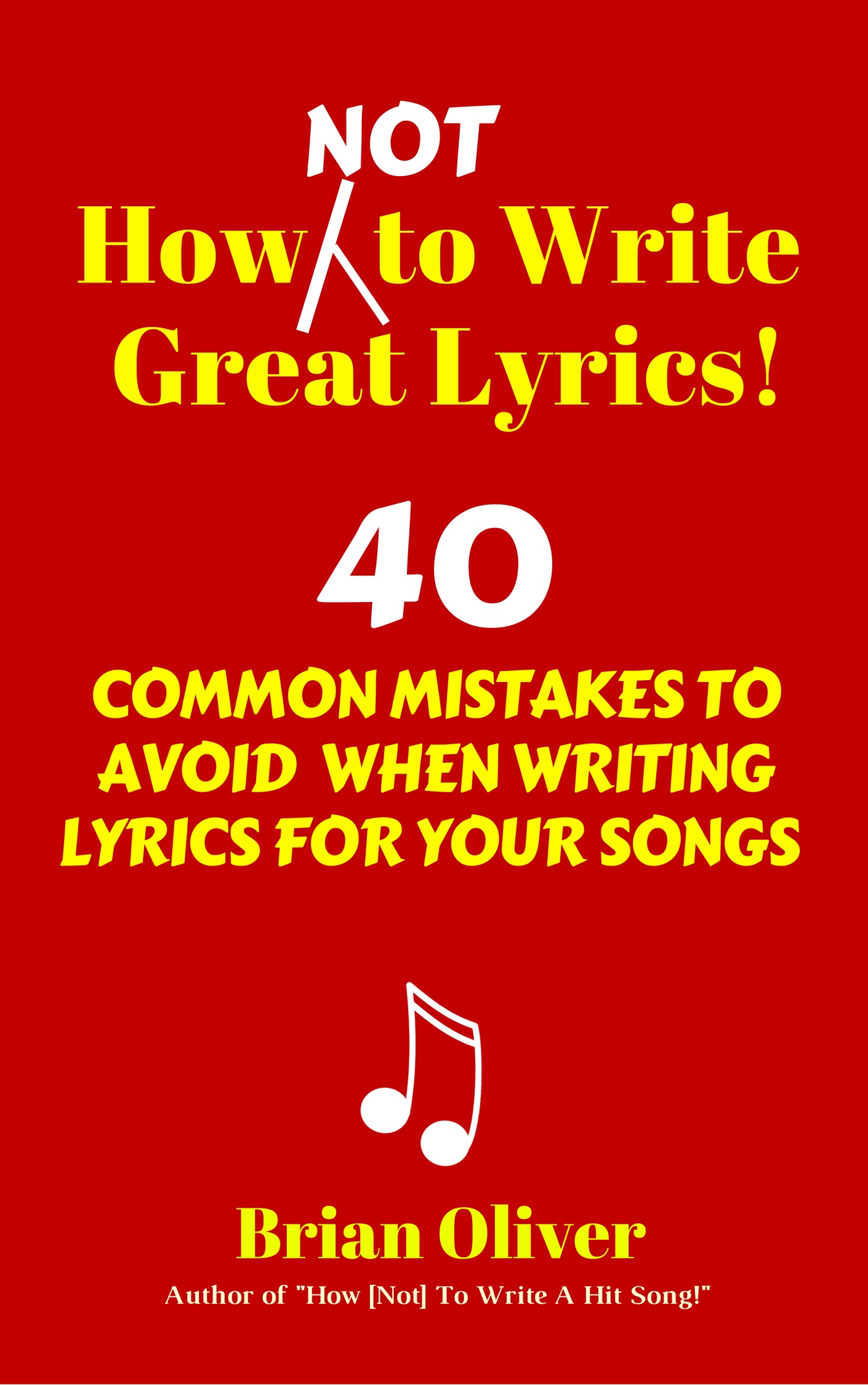 “How [Not] To Write Great Lyrics! – 40 Common Mistakes To Avoid When Writing Lyrics For Your Songs” is available from Amazon and Barnes & Noble as a US paperback, UK paperback and as an eBook from Amazon’s Kindle Store. It is also available from Apple’s iTunes Book Store, Barnes & Noble’s Nook store, and Rakuten’s KoboBooks.

![“HOW [NOT] TO WRITE A HIT SONG! - 101 COMMON MISTAKES TO AVOID IF YOU WANT SONGWRITING SUCCESS” is available from Amazon as a paperback and also as an eBook from Amazon’s Kindle Store, Apple's iTunes Store, Barnes and Noble's Nook store, and from KoboBooks.com.](https://thehitformula.com/wp-content/uploads/2013/05/how-not-to-write-a-hit-song-smashwords-cover-blog-widgit-188x282.jpg?w=100) “How [Not] To Write A Hit Song! – 101 Common Mistakes To Avoid If You Want Songwriting Success” is available from Amazon as a US paperback, UK paperback and as an eBook from Amazon’s Kindle Store, Apple’s iTunes Store (Books/Arts & Entertainment/Music), Barnes & Noble’s Nook store, and from KoboBooks.
“How [Not] To Write A Hit Song! – 101 Common Mistakes To Avoid If You Want Songwriting Success” is available from Amazon as a US paperback, UK paperback and as an eBook from Amazon’s Kindle Store, Apple’s iTunes Store (Books/Arts & Entertainment/Music), Barnes & Noble’s Nook store, and from KoboBooks. We all have the same 24 hours in a day as songwriters like Taylor Swift, Pharrell Williams and Macklemore and Ryan Lewis (pictured), so how come they are able to turn out so many hit songs on a regular basis while other writers can’t?



 SONGWRITING: THE HIT FORMULA